Global disruptions hurt small business and farmers first but, in the end, they will rebuild the future
As small business owners we constantly face the dilemmas of a high speed, interconnected world. We have to adapt to the opportunities and threats, and we have to plan those responses in an erratic and unstable environment.
We are small players in long supply chains, price takers in a cost-of-living crisis, and often dependent on external advisers to deal with the increasingly complex and rapid changes that affect our bottom line.
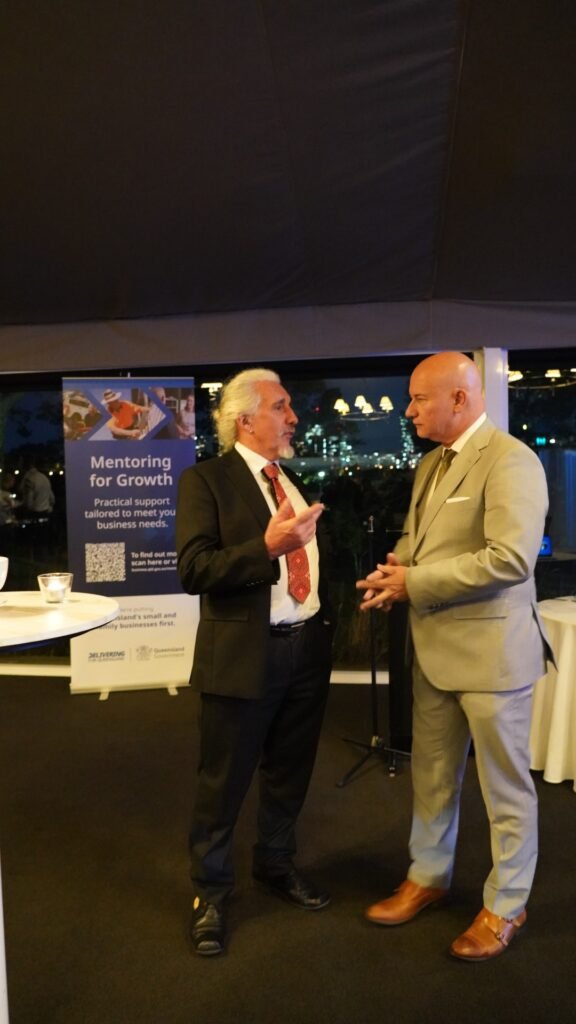
As a mentor in the Queensland Government’s Mentoring for Growth program, an educator in the Griffith Business School and a life-long tech developer, I have the good fortune to regularly refresh my understanding of the impacts of this turmoil on day to day businesses. If we do not keep up, we are overrun in the crush, but it is so easy to take a wrong turn as we race into the unknown with limited capacity to check and recheck the information on which we must act.
The advantage of this overview, and my decades of experience, is that I understand the value of taking the time to make decisions, as well as the need to move fast once the decision is made, or the ground shifts beneath you. Start now and fail often was the adage of the turn of the century tech industry. That is now being ameliorated by the knowledge that redundancy and good foundations take time and care.
Next month is Small Business Month in Queensland and the newly minted Commissioner of Small Business, Nicolle Kelly, and the very active Minister for Customer Services and Open Data and Minister for Small and Family Business, The Honourable Steve Minnikin, will be leaping and bounding about the great state of Queensland, meeting business owners to identify and guide us along the pathways through this maze.
In response to some of my recent articles on effective use of AI, the power of embedded networks and recognizing value in pricing, I have been working with some of you to recognize and harness the tension between resilience and efficiency, growth and consolidation, creativity and familiarity. Erratic change leads to uncertainty, and that demands new skills that do not predict the future from the past. My academic work focuses on examining the patterns in the tensions of the present and developing responses to the emerging scenarios.
We have no control over which scenarios emerge, but the better we understand what they might look like, the more hope we have of being ready. Disruptions to global supply chains might hurt small business most but, in the end, it is small business that will rebuild the future.